

Most likely, yes. If your project touches plumbing, electrical, walls, or anything structural, both Lee’s Summit and Kansas City require a permit before the first nail goes in. Cosmetic refreshes sit in a smaller exempt category, and even that category has edges. The breakdown below shows exactly which side of the line your project falls on.
The Five-Second Permit Test
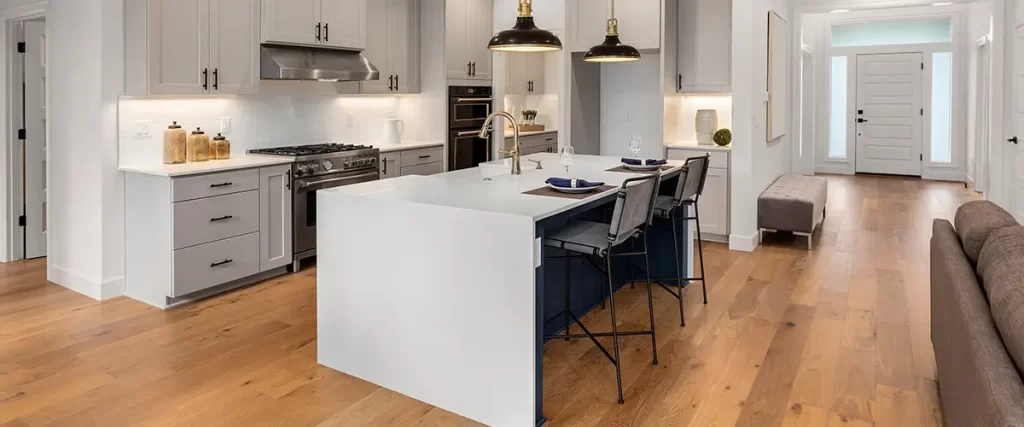
Ask yourself one question: Am I changing the bones of the house, or freshening up the surfaces?
Swapping a vanity into the same plumbing footprint, repainting walls, replacing a door in its existing frame, or laying new tile over a sound subfloor sits in the no-permit zone in most cases. Moving a toilet, knocking out a wall, rewiring a circuit, or running new plumbing puts you in permit territory. The cities don’t make exceptions for small jobs, and inspectors know how to spot work that was covered up in a hurry.
What Triggers A Permit, And What Doesn’t
Here’s the cleanest breakdown for the metro area:
| Project | Permit Needed? |
| Painting walls and ceilings | No |
| New flooring over existing subfloor | No |
| Vanity swap in same location | Usually no |
| Cabinet replacement in same footprint | No |
| Countertop replacement | No |
| Door or window swap in existing opening | No |
| Like-for-like fixture swap (faucet, showerhead, toilet) | No |
| Moving a toilet, sink, or shower drain | Yes |
| Adding or relocating circuits | Yes |
| Removing or moving any wall | Yes |
| New ductwork or ventilation | Yes |
| Tub-to-shower conversion | Yes |
| Bathroom or kitchen layout change | Yes |
| Basement finish | Yes |
| Roof work over 32 sq ft of decking (KCMO) | Yes |
Lee’s Summit: How It Works
Lee’s Summit handles everything through its Development Services Department, with most permits available online or at City Hall on the first floor. Residential remodel permits are good for 180 days from issue, so the city expects projects to actually move forward once the paperwork is approved.
A few specifics worth knowing:
- Permits can only be pulled by licensed contractors or the homeowner of a primary residence, not friends, family, or contractors operating without a city license.
- Lee’s Summit operates under a Class A through Class D contractor licensing system. Class A handles general structural work. Class D covers plumbing, electrical, and HVAC separately, which is why a single project often involves multiple licensed trades on file.
- For projects without engineered plans, you can submit a Scope of Work application directly to devtech@cityofls.net and skip the formal review track.
- Sewer connection has its own track if you fall outside the public sewer line range, with private system permits routing through Jackson County Public Works.
The Development Services line at 816.969.1200 is the right call if your project sits in a gray area before you commit.
Kansas City: Same Idea, Different Process

KCMO routes everything through the CompassKC online permit portal, which lives under City Planning & Development on the 5th floor of City Hall. The big procedural difference from Lee’s Summit is that Kansas City typically wants separate permits for each trade involved. So a full bathroom remodel often means an interior remodel permit for the building scope, plus individual permits for plumbing, electrical, and HVAC work.
Each permit comes with its own inspections. A complete bathroom can carry 15 to 20 separate inspection touchpoints by the time the certificate of occupancy is signed off. The city built the process this way on purpose, and your contractor coordinates the sequencing so the project doesn’t lose days waiting on the next visit.
KCMO is also clearer than most cities about what’s exempt: painting, papering, carpet and floor coverings, holes patched in plaster, and cabinet replacement in the same location all sit on the no-permit list. Window and door replacement in existing openings is exempt unless fire-rated assemblies are involved.
If your home sits in a historic district or carries any heritage designation, the rules tighten. Our piece on historic home renovations across Lee’s Summit covers how those reviews layer on top of standard permitting, which matters more than people realize during scoping.
What Permits Actually Cost
Permit fees scale with project valuation. For a typical residential bathroom or kitchen remodel in this metro, expect:
- Base residential remodel permit, $100 to $400, depending on city and project size
- Each separate trade permit (plumbing, electrical, HVAC), $50 to $200 apiece
- Plan review fees if engineered drawings are required, $100 to $500
- Re-inspection fees if something fails the first visit, usually $50 to $100 per call
Most full bathroom or kitchen remodels in this area carry several hundred to over a thousand dollars in total permit costs. That’s a small fraction of the project, and a reputable contractor has it baked into the quote already.
What Happens If You Skip Permits
Tempting on small jobs. The actual consequences land harder than most homeowners expect.
- Stop-work orders can shut your project down mid-tile, and the work that’s already in place has to sit until you backfile, which often means partial demo to inspect what got covered up.
- Fines vary by city and project, and $500 to $2,500 is a common range, plus the cost of the permit you should have pulled originally.
- Insurance refusal is the quiet one nobody warns you about. If unpermitted electrical or plumbing work causes a fire or a flood, your homeowner’s policy can deny the claim, and that exposure can run six figures fast.
- Resale headaches show up later when you list the house. Title companies and home inspectors flag unpermitted work routinely. Buyers either walk, demand a price reduction, or require retroactive permitting and inspection on your dime.
We’ve been called in to remediate every one of those scenarios after a previous contractor cut corners. The fix is always more expensive than the original permit would have been.
Who Pulls The Permit?
Two paths, and the choice matters more than people realize.
When your contractor pulls the permit, they’re the responsible party. The licenses are already on file, the inspectors are familiar faces, and the rough-in and finish inspection schedule gets coordinated against the build calendar so the project keeps moving. This is the standard for anything we build.
When you pull it as the homeowner on your primary residence, both cities allow it. You then own the code compliance, the inspection scheduling, and any callbacks for failed inspections. If you’re hiring trades to do the actual work, you’re also vouching for that work to the inspector.
If timing is part of your planning, our breakdown of the best time of year to remodel in Missouri shows how lead times shift through the year and where permits fit into seasonal scheduling.
Quick FAQ
How long does the permit process actually take?
Plan review for a standard residential remodel runs 5 to 10 business days in both cities. Over-the-counter permits for simpler scopes can be same-day. Anything with structural changes can stretch to 3 weeks once back-and-forth with the reviewer is factored in.
Do I need a permit for a tub-to-shower conversion?
Yes. You’re modifying drain location, the waterproofing system, and often framing under the new shower pan. All three trigger inspections. If you’re still weighing the conversion itself, our bathtub vs shower comparison covers the use-case decision before you get to the permit step.
What if I’m just replacing fixtures?
Like-for-like swaps on existing supply and drain lines don’t need a permit. The moment you alter a supply line, drain location, or circuit, you do.
Can I pull the permit and have a contractor do the work?
Both cities allow this for primary residences. We’d push back on it. The permit holder is the responsible party for code compliance, and you’d be vouching for trade work you didn’t perform yourself.
What if I find unpermitted work in a house I just bought?
Call the building department before doing anything. Both cities have a retroactive permit process where an inspector determines whether the existing work meets code. If it does, you pay a fee and move on. If it doesn’t, you have a decision to make about how much demo it’ll take to make it right.
Does HOA approval count as a permit?
No. Two separate processes that often confuse first-time remodelers. HOA covers aesthetics and neighborhood standards. Building permits cover safety and code compliance. Some projects need both.
Are permits transferable if I sell mid-project?
Lee’s Summit permits expire 180 days from issue regardless of ownership. New owners typically need to file an extension or reapply. Kansas City handles transfers case by case.
The Faster Way Through All This
Reading this far means you now know more about Jackson County permit codes than 95 percent of homeowners. It also means none of that knowledge has actually moved your bathroom any closer to being remodeled.
That’s the part we handle. Every project we run includes the permit work, the inspection scheduling, the code compliance, and the paperwork loop with the city. Our team is licensed in both Lee’s Summit and Kansas City, so the permit conversation isn’t a separate phase you have to manage. It’s already inside the timeline, the budget, and the project plan we hand you on day one.
If you’d rather pick out tile than read another page of municipal code, take a look at our bathroom remodeling service, or call us at (816) 970-9256 or message us here.